Art hotels here are buildings that carried another life first — a townhouse, a palace, a mansion, a workshop — and were adapted rather than replaced. What is worth describing is usually the shell: the courtyard, the stair, the street elevation, and what the conversion chose to keep.
What it isNineteenth-century townhouse converted to a hotel
Standing inCarrer Riudarenes, Gothic Quarter
Source dateSeptember 2026
The Wittmore occupies a nineteenth-century townhouse on a short lane inside the Gothic Quarter of Barcelona, a few steps back from the busier streets around it. The conversion kept the narrow street frontage and the height of the original floors, so the building still reads from outside as a private house rather than as a hotel entrance.
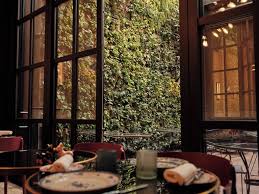
Inside, the ground floor opens onto a small courtyard with a pool and planting, and the stair core carries most of the movement between levels. Contemporary pieces and photographs hang along the corridors and in the sitting rooms, placed close together in the way a private collection tends to be.
The lane itself is quiet and mostly residential. The cathedral, the Plaça Reial and the covered market on La Rambla are all within a short walk, and metro entrances sit on either side of the quarter. Deliveries and taxis use the wider street at the corner.
Palacio de los Duques Gran Meliá
Cuesta de Santo Domingo, central Madrid, Spain
What it isNineteenth-century palace building
Standing inCuesta de Santo Domingo
Source dateSeptember 2026
The hotel stands in a nineteenth-century palace on the Cuesta de Santo Domingo, in the block behind the Teatro Real and the Royal Palace gardens. The street elevation was kept, along with the courtyard plan behind it, and the guest floors were fitted into the older structure rather than into a new frame raised on the site.
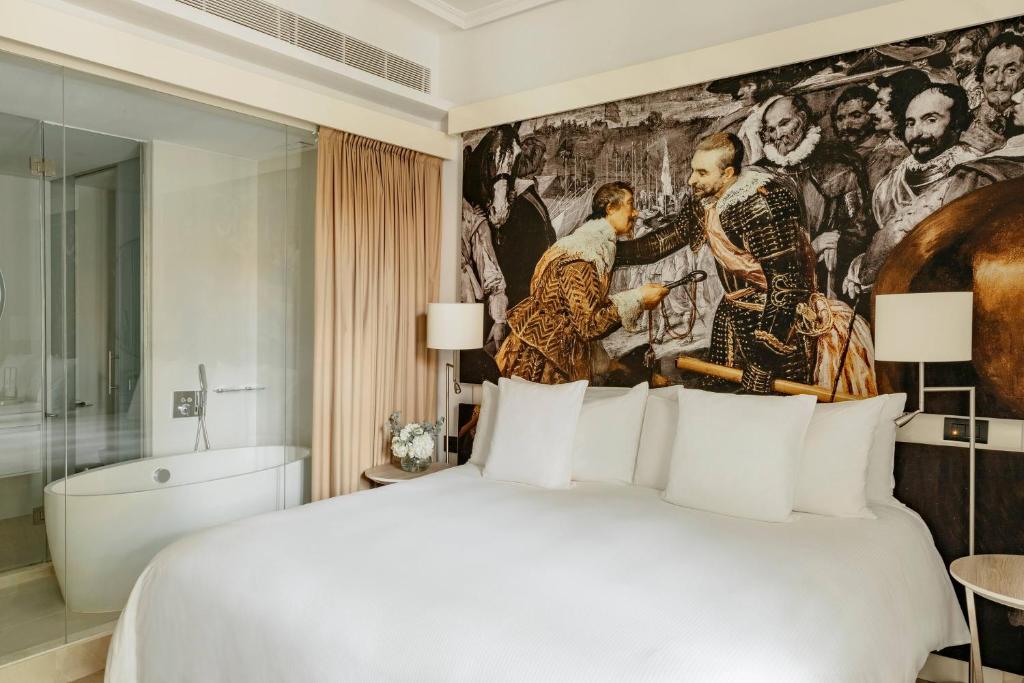
The central courtyard is glazed over and used as the main sitting room, with a garden terrace on one side. Works and reproductions after Velázquez run through the public floors as a single theme, and the stair and lift lobbies were treated as part of that arrangement rather than left plain.
Ópera station is the nearest metro. The opera house, the cathedral and the Plaza de Oriente are all a short walk away, and the Gran Vía shopping streets begin a few blocks north. The immediate street is narrow and carries little through traffic.
Vila Foz Hotel & Spa
Avenida Montevideu, Foz do Douro, Porto, Portugal
What it isNineteenth-century seafront mansion with a newer wing
Standing inAvenida Montevideu, Foz do Douro
Source dateSeptember 2026
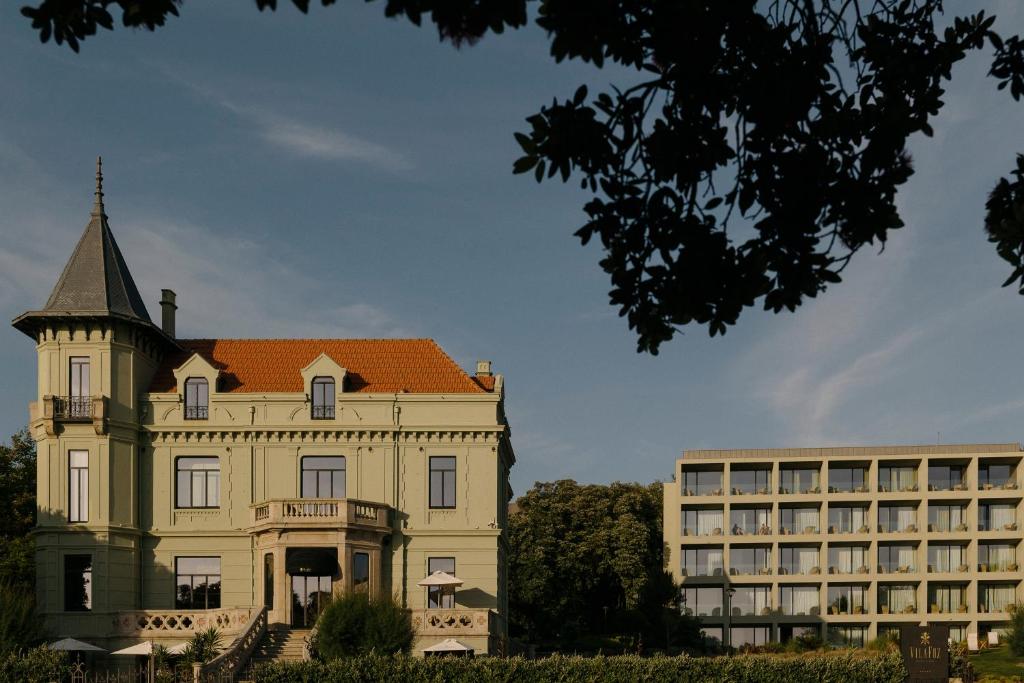
Vila Foz occupies a nineteenth-century mansion on the seafront avenue at Foz do Douro, at the western edge of Porto where the river meets the Atlantic. The old house holds the reception rooms and a small number of bedrooms; a newer wing behind it holds the rest, so the historic elevation faces the water on its own.
The restored rooms keep their plasterwork, stone stairs and tall windows, and the dining room and bar sit inside the original volumes. The newer wing is plainer and holds the spa. Paintings and commissioned pieces are placed through both parts, which keeps the two halves reading as one address.
The avenue runs along the shore, with the boardwalk and the beaches immediately opposite the entrance. The Foz gardens and the lighthouse stand a short walk to the south, and the fort sits between them. Central Porto lies upriver and is reached by tram or by bus along the water.
Casa Cacao
Plaça Catalunya, old town, Girona, Spain
What it isTown building above a chocolate workshop
Standing inPlaça Catalunya, old town
Source dateSeptember 2026
Casa Cacao stands at the edge of the old town of Girona, on the square where the bridges cross the Onyar. The building was rebuilt behind its street wall to hold a chocolate workshop at ground level and a small hotel above it, so the working part of the address and the guest floors share one entrance hall.
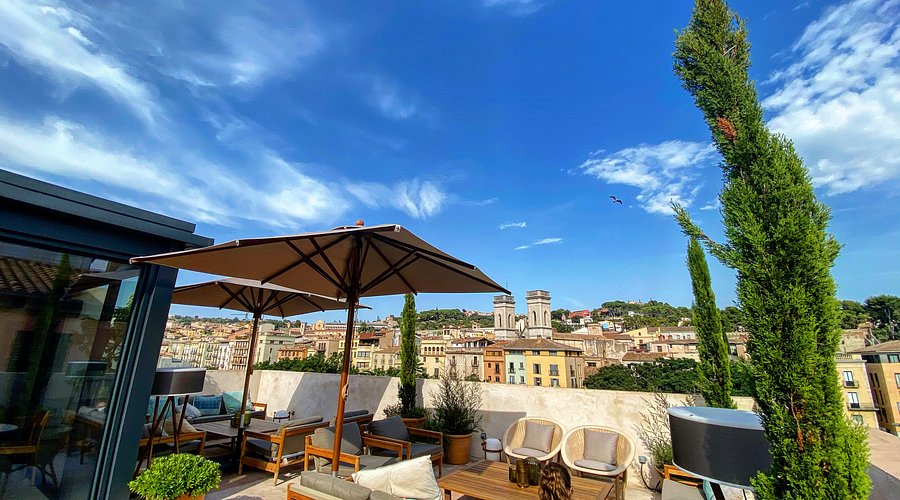
The workshop and its counter are visible from the hall, and the smell of roasting carries up the stair. Bedrooms look either over the square or back into a courtyard, and the roof terrace is open to guests. Furniture and fittings were made for the building rather than bought in.
The bridges, the cathedral stair and the colour-washed houses along the river are all within a few minutes on foot, and the arcaded streets of the old town begin behind the building. The railway station is a walk of about a quarter of an hour, on the newer side of the town.
silvervistapro is independent and has no connection with the hotels described. Everything here comes from published sources and can change without notice. Nothing on this site is for sale, and no reservation can be made through it. Confirm opening, access and conditions with the hotel before travelling.